
By Marie-Dominique Rail · February 15, 2021
Tears belong to the intimate language of the human body.
They accompany us through grief, relief, tenderness, exhaustion, and moments of unexpected joy.
We may cry while remembering someone we love.
While listening to a familiar melody.
While receiving news that changes our lives.
Or when an emotion we have carried quietly finally finds expression.
I have always been moved by the way our bodies participate in our emotional experiences.
A trembling voice, a change in breathing, the warmth of tears upon our cheeks.
These responses remind us that our inner lives are inseparable from our physical existence.
The Body’s Language
Tears serve several biological functions.
They help protect and lubricate our eyes, respond to irritation, and may accompany emotional experiences.
Their composition can vary according to the circumstances in which they are produced.
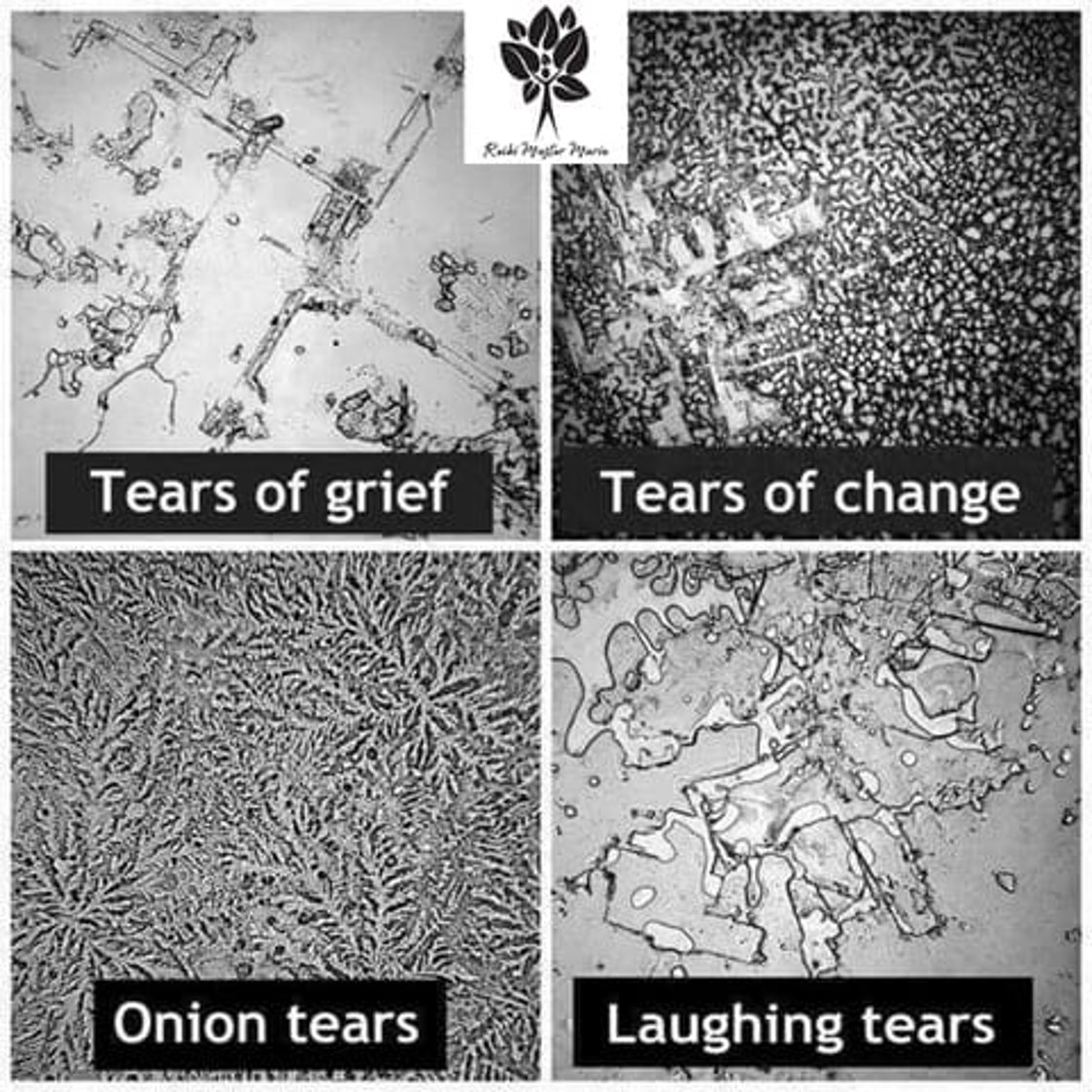
Under a microscope, dried tears may form intricate patterns influenced by their chemical composition and the conditions in which they dry.
These patterns are fascinating to observe.
They do not provide a scientifically established way of identifying the precise emotion a person was experiencing.
The meaning of our tears belongs to a much more personal story.
When Grief Finds Expression
Grief can reach us through the smallest details of daily life.
An empty chair.
A familiar scent.
A photograph discovered unexpectedly.
A song that brings back the sound of someone’s voice.
The body may respond before we have found the words to describe what we are feeling.
Tears can accompany these moments of remembrance.
They may express sorrow, longing, gratitude, or the complexity of loving someone whose physical presence is gone.
Each person’s experience of grief is different.
Some cry often.
Others rarely shed tears.
Both experiences deserve respect.
Tears of Joy and Tenderness
We also cry when something beautiful touches us deeply.
A reunion.
An expression of kindness.
The birth of a child.
A moment of reconciliation.
The recognition that we have been understood.
These tears may arise when an experience reaches a place within us that words cannot easily express.
They remind me how deeply our lives are shaped by relationships.
Allowing Our Experience to Be Our Own
There can be pressure to remain composed during difficult circumstances.
We may feel uncomfortable crying in front of others or uncertain about how our emotions will be received.
I believe tenderness toward ourselves matters during these moments.
We can allow our feelings to be acknowledged in ways that feel safe and appropriate.
We can also recognize when we need privacy, companionship, or professional support.
Our emotional experiences deserve care, whatever form their expression takes.
The Sacred Meaning We Discover
When I speak of the sacred language of tears, I am describing the meaning they can hold within our human experience.
The love behind our grief.
The relief of being heard.
The gratitude that accompanies a precious memory.
The tenderness we feel when another person opens their heart.
Our tears may become part of the way we remember, understand, and accompany ourselves through life.
And in their quiet presence, we may recognize something deeply human.
Our capacity to feel.
To love.
To remember.
And to remain connected to what matters.
Peace be with you, always.
Marie-Dominique Rail
Continue Exploring
When the Soul Leaves the Body · When the Heart Needs Healing · Beyond the Veil · The Passages · MariDo Music
Continue this reflection with Understanding Suicide with Compassion.
Related reflection: Remembrance — Grief.
Leave a Reply