
By Marie-Dominique Rail · Originally posted December 24, 2023
Finding Beauty and Presence in Ordinary Gestures
There is something comforting about the familiar objects we bring into our homes.
A bowl of fruit.
Fresh herbs resting on a kitchen counter.
A window opened to the morning air.
A table prepared with care.
These ordinary details participate in the atmosphere of the places where we live.
I have always appreciated the relationship between nature, food, and the quiet gestures through which we care for our surroundings.
Lemon and salt offer a simple image of this relationship.
Two Familiar Ingredients
Lemons have long been valued in cooking for their fragrance, acidity, and flavor.
Salt has accompanied human food preparation and preservation for generations.
Both also appear in traditional household practices.
Their practical properties depend upon how they are used.
Citric acid can help remove certain mineral deposits from suitable surfaces.
Salt can serve particular cleaning purposes and absorb moisture under appropriate conditions.
These properties do not establish that placing a cut lemon filled with salt in a room will disinfect the air or remove harmful microorganisms.
The Beauty of a Simple Gesture
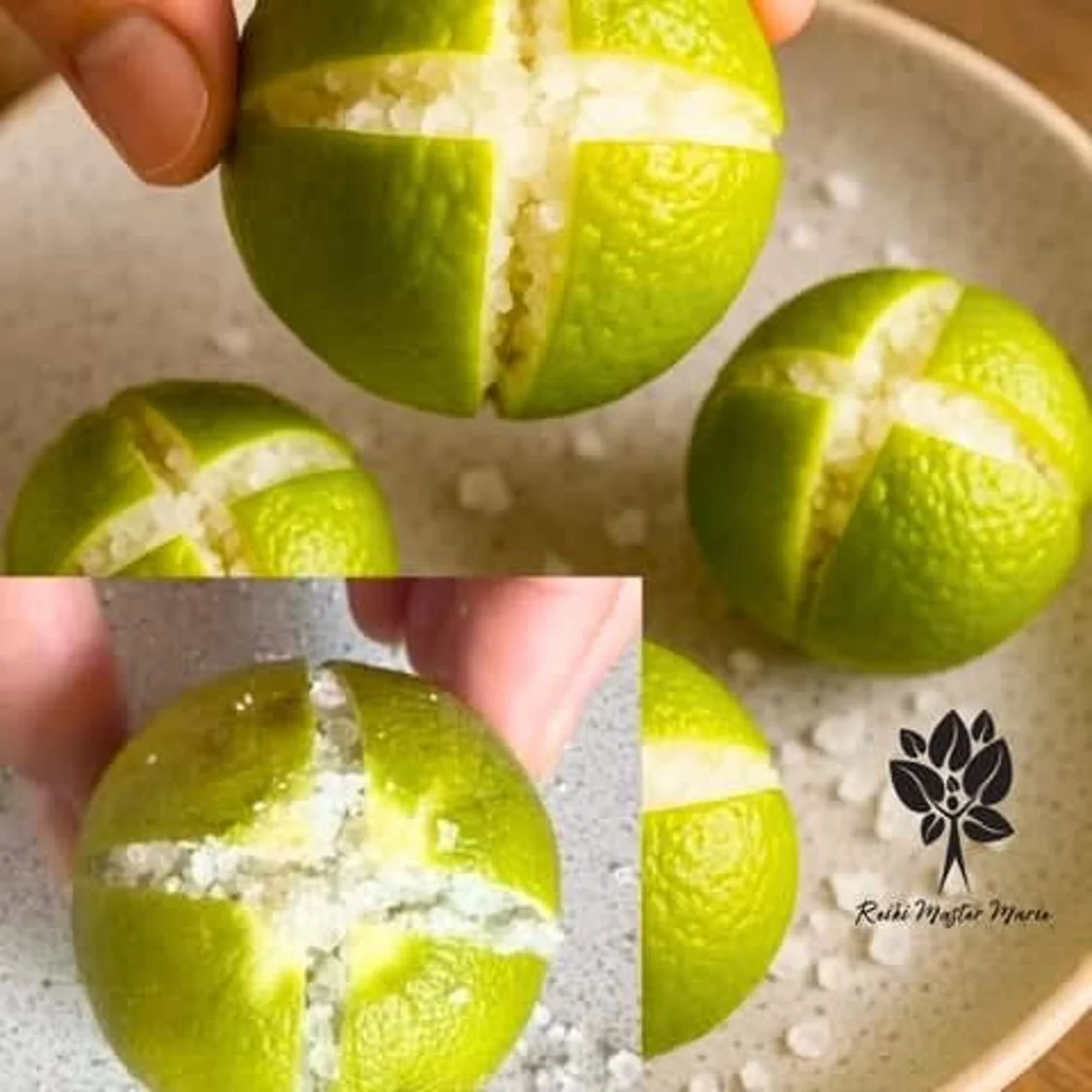
Some people enjoy placing a lemon with coarse salt in a small dish as a decorative or symbolic ritual.
The bright color of the fruit.
Its familiar fragrance.
The texture of the salt.
The act of preparing something with our hands.
These details may create a personal feeling of freshness or renewal.
Their meaning belongs to the experience we bring to them.
A Small Ritual for the Home
You may wish to choose a fresh lemon.
Place it on a stable dish.
Cut it carefully into sections, keeping the base intact.
Add a little coarse salt between the sections.
Set the dish in a suitable place, away from children and pets.
The lemon is a perishable food and should be discarded when it begins to deteriorate.
It should not be relied upon to control indoor humidity, mold, odors, or air quality.
Those concerns require appropriate ventilation, cleaning, moisture management, and, when necessary, professional attention.
Caring for the Spaces We Inhabit
Our homes accompany us through many experiences.
They hold conversations.
Meals.
Quiet evenings.
Periods of celebration.
Moments of sorrow.
The way we tend these spaces may influence our sense of comfort.
Opening a window when outdoor conditions allow.
Cleaning a familiar surface.
Preparing a nourishing meal.
Bringing fresh flowers into a room.
Allowing a little more light to enter.
These gestures can become part of our relationship with the places we inhabit.
The Symbolism of Renewal
Within some traditions, salt has been associated with purification and protection.
Citrus fruits may symbolize freshness, vitality, or abundance.
These meanings belong to cultural and spiritual interpretation.
We can appreciate them without expecting the objects themselves to change invisible energies or treat health conditions.
A symbolic gesture may simply offer a moment of intention.
A reminder to care for what surrounds us.
The Quiet Gift of Simplicity
I believe our homes become meaningful through the lives we share within them.
The familiar objects.
The meals we prepare.
The memories gathered over time.
The attention offered to those who enter.
A lemon and a little salt may become a small expression of that attention.
A gesture of simplicity.
A moment of beauty.
And an invitation to recognize the care already present within our everyday lives.
Peace be with you, always.
Marie-Dominique Rail
Practical note: A lemon-and-salt arrangement is decorative or symbolic. It is not an air purifier, disinfectant, dehumidifier, or substitute for mold remediation. Keep it away from children and pets and discard it promptly if it deteriorates.
Continue Exploring
Cleansing Your Home · Hydrogen Peroxide: Understanding Its Uses and Precautions
Leave a Reply