
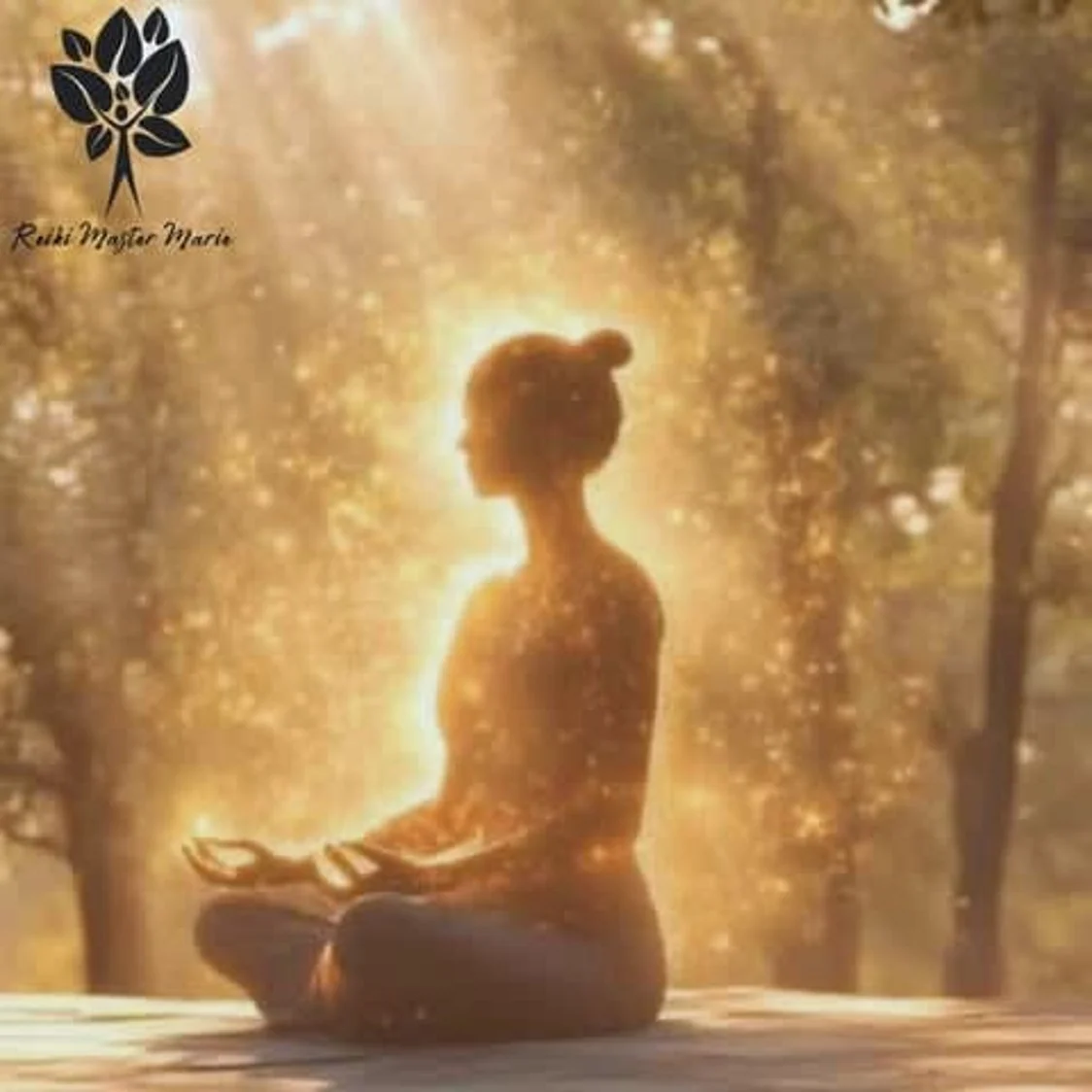
By Marie-Dominique Rail · Originally posted December 16, 2024
A Gentle Invitation to Presence, Silence, and Inner Listening
Meditation has accompanied human beings through centuries of spiritual and contemplative practice.
Its forms are many.
Silent prayer.
Attention to the breath.
The repetition of a meaningful phrase.
Walking in awareness.
Listening.
Sitting quietly.
Each tradition brings its own understanding and purpose.
Within my own spiritual life, meditation has become a way of listening more attentively.
To my body.
To my thoughts.
To the movement of my emotions.
And to the silence that can accompany the deepest questions of life.
Beginning Where We Are
We may approach meditation with the idea that we must become completely still.
That our thoughts should disappear.
That peace should arrive immediately.
Our experience may be quite different.
We may feel restless.
Become distracted.
Notice physical discomfort.
Or discover that silence brings certain emotions closer.
These experiences belong to the diversity of meditation.
We can approach them with curiosity and patience.
Finding an Anchor
An anchor gives our attention a place to return.
For some people, the natural rhythm of breathing feels comfortable.
Others prefer listening to sounds in the room.
Feeling their feet against the floor.
Looking at a candle.
Or repeating a prayer.
The choice is personal.
We can select an approach that respects our needs and circumstances.
Meeting Our Thoughts
Thoughts continue arising during meditation.
A memory.
A concern.
An unfinished task.
A familiar conversation.
We may notice that our attention has moved away from its anchor.
We can gently return.
This movement of noticing and returning is part of the practice.
There is no need to judge ourselves for becoming distracted.
The Meaning of Silence
Silence can hold different meanings.
It may offer rest.
Invite reflection.
Deepen prayer.
Or allow us to recognize emotions that have received little attention.
For some, silence feels nourishing.
For others, particularly those living with trauma or intense distress, inward attention may feel uncomfortable.
Meditation can be adapted, and it is always possible to pause or choose another form of support.
Meditation in Ordinary Life
Meditation may find a place within familiar activities.
Walking through a garden.
Listening to music.
Preparing a meal.
Watching the light change through a window.
We can bring attention to the experience before us.
The sounds.
The textures.
The movements.
The ordinary presence of life.
These moments may become invitations to greater awareness.
The Spiritual Dimension
Within some traditions, meditation is closely connected with spiritual awakening, divine presence, or the nature of consciousness.
Other approaches emphasize attention, emotional regulation, or psychological well-being.
Their purposes and teachings are not identical.
For me, meditation can become a form of spiritual companionship.
It allows me to bring my questions into silence.
To pray.
To listen.
And to remain open to the mystery of life.
A Gentle Practice
If you wish, find a comfortable position.
Notice the support beneath your body.
Allow your eyes to remain open or closed.
Bring your attention toward a sound, a familiar object, or your natural breathing.
Remain for a few moments.
When thoughts arise, acknowledge them.
Return gently to your chosen anchor.
You may wish to offer a simple phrase:
I am here.
I welcome this moment.
May peace accompany me.
Continue for as long as feels comfortable.
Carrying Presence Into the Day
Meditation may influence the way we notice our experiences.
We may become more aware of our reactions.
Recognize when we need rest.
Or find opportunities to respond with greater care.
These changes are personal and may develop gradually.
There is no particular spiritual achievement we must reach.
The Quiet Invitation
I believe meditation offers a beautiful opportunity to deepen our relationship with ourselves.
It may become a place for prayer.
For reflection.
For rest.
For listening.
We can approach it in a way that respects our lives.
And allow its meaning to unfold through experience.
Peace be with you, always.
Marie-Dominique Rail
Editorial note: This revision preserves the original contemplative invitation while removing claims that meditation necessarily reveals an eternal soul, dissolves the ego, produces spiritual awakening, or guarantees relief from anxiety. It recognizes the diversity of contemplative traditions and acknowledges that meditation may need adaptation for people experiencing trauma or distress.
Continue Exploring
Conscious Breathing · Three Gentle Evening Rituals for Rest and Renewal
Continue exploring this theme in What Is a Channel of Light?.
Related reflection: Dreaming: Consciousness at Work During Sleep.
Related reflection: Peace: An Inner State of Harmony and Spiritual Communion.
Leave a Reply