
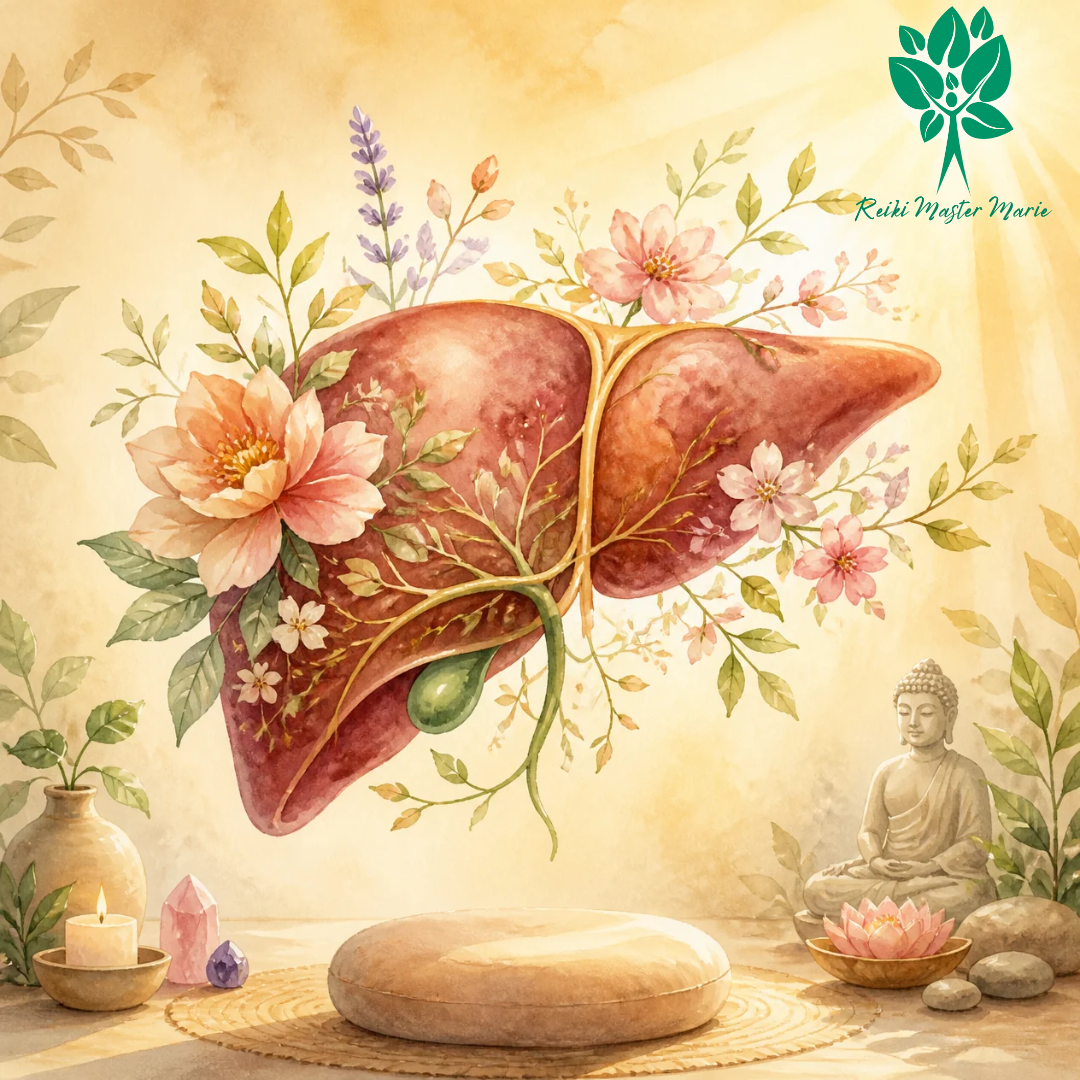
Our bodies accompany us through every season of life.
They carry us through ordinary days, profound changes, periods of vitality, and times when our strength asks for greater care.
We often become aware of the body when something changes.
A feeling of fatigue.
A restless night.
Tension across the shoulders.
An unfamiliar discomfort.
These experiences may awaken questions about our health, our daily rhythms, and the relationship we have with ourselves.
I have come to appreciate the importance of listening to the body with curiosity and respect.
Listening allows us to recognize our needs, seek appropriate care, and become more attentive to the ways we live.
Among the many traditions that explore the relationship between physical life and emotional experience, Traditional Chinese Medicine offers a particularly rich symbolic language.
Its understanding of the Liver invites us to reflect upon movement, expression, flexibility, and our relationship with change.
The Liver Through Two Ways of Understanding
In modern medicine, the liver is a remarkable organ.
It participates in digestion through the production of bile, processes nutrients, metabolizes medications and other substances, stores important nutrients, and produces proteins essential to the body’s functioning.
Its health depends on many factors, including genetics, infections, metabolic conditions, medications, alcohol exposure, and other aspects of our physical lives.
Traditional Chinese Medicine approaches the Liver through a different framework.
Within this tradition, the Liver is understood as a functional system associated with the movement of Qi, the traditional concept of vital energy, and the regulation of Blood.
It is also connected symbolically with the tendons, the eyes, emotional expression, and our capacity to adapt.
These traditional associations belong to a system of understanding developed through centuries of observation and practice.
They do not describe the same anatomical or physiological relationships established by modern medical science.
I find value in recognizing the distinct contributions and limitations of these perspectives.
One helps us understand the physical organ and its health.
The other offers a traditional language through which we may contemplate our experiences of movement, emotion, and inner balance.
The Wood Element: Growth and Flexibility
In Traditional Chinese Medicine, the Liver is associated with the Wood element.
Wood evokes the living movement of spring.
Roots extend beneath the earth.
Branches respond to the wind.
New growth emerges as the seasons change.
Within this symbolic framework, Wood represents expansion, adaptability, direction, and renewal.
I find this image meaningful when reflecting on our own lives.
We grow through experiences that ask us to change.
We learn to recognize what nourishes us.
We discover that flexibility can help us respond to circumstances beyond our control.
A tree moves with the wind while remaining connected to its roots.
This image offers a beautiful invitation to consider our own sources of stability and our capacity to adapt.
When Emotions Ask for Our Attention
Traditional Chinese Medicine associates the Liver system with anger, frustration, and the movement of emotions.
In this framework, emotional stagnation is sometimes described through the concept of constrained Liver Qi.
This is a traditional interpretation rather than a medical explanation for liver disease.
From a psychological perspective, we know that emotions can influence our physical experience.
Stress may affect sleep, muscle tension, digestion, attention, and our sense of well-being.
Strong emotions may change our breathing or leave us feeling restless and fatigued.
These experiences arise through complex interactions involving the nervous system, our circumstances, and our individual health.
They deserve to be understood in their own context.
An emotion is part of our human experience.
Anger may help us recognize a boundary.
Sadness may accompany a loss.
Frustration may reveal a need for change.
Fear may arise when something important feels uncertain.
Listening to these emotions can help us understand what we are experiencing and consider what kind of support we need.
The Inner Life We Carry
Many people become accustomed to setting aside their feelings.
Responsibilities continue.
Families need attention.
Work must be completed.
During periods of illness or grief, even ordinary activities can require considerable effort.
We may find ourselves attending to everything around us while giving little attention to our own inner experience.
Over time, it can become meaningful to create opportunities for reflection.
We might notice an emotion that returns frequently.
A situation that leaves us feeling overwhelmed.
A relationship in which we struggle to express our needs.
Or a recurring desire for rest and quiet.
These observations can help us recognize patterns in our lives.
They also invite us to respond with compassion rather than judgment.
The Hun: Dreams and Inner Direction
Traditional Chinese Medicine includes a spiritual concept known as the Hun, often translated as the ethereal soul.
In classical Chinese thought, the Hun is associated with the Liver system and connected with dreams, imagination, and aspects of our inner direction.
I approach this teaching as part of a rich spiritual and philosophical tradition.
It invites me to contemplate the relationship between our inner life and the way we envision our future.
During a major life transition, our dreams may change.
An experience of illness may alter our priorities.
Grief may transform our understanding of what matters.
We may discover aspirations that differ from those we held earlier in life.
Giving ourselves time to explore these changes can become part of our personal reconstruction.
Caring for the Body with Kindness
The body benefits from thoughtful, practical care.
Each person’s needs differ according to age, health, abilities, and circumstances.
Gentle practices may support our general well-being when they are appropriate for our individual situation.
Movement: Respecting Our Natural Rhythm
Walking, stretching, yoga, Tai Chi, and Qi Gong can offer opportunities to move with attention.
These activities may support mobility, relaxation, balance, and emotional well-being.
For someone recovering from illness or living with physical limitations, movement may need to be adapted with professional guidance.
Even a short, comfortable period of movement can become an opportunity to reconnect with the body.
The intention is to recognize what feels supportive and sustainable.
Expression: Giving Feelings a Place
Writing has long been one of the ways I explore my inner life.
A notebook can hold thoughts that are still taking shape.
It can receive questions, memories, gratitude, and emotions that we may struggle to express aloud.
Music, painting, conversation, prayer, and other forms of creativity may offer similar opportunities.
Some experiences also benefit from the support of a qualified mental health professional.
There are many ways to give our feelings the attention they deserve.
Breathing: Returning to the Present Moment
Our breathing changes throughout the day.
It responds to movement, rest, emotion, and physical conditions.
For some people, comfortable, unforced breathing practices can encourage relaxation and a greater awareness of the present moment.
You may enjoy sitting quietly and observing the natural rhythm of your breath.
Allowing the shoulders to relax.
Feeling the support beneath your body.
Noticing the sounds around you.
There is no need to force deep breathing or create a particular sensation.
The practice can remain simple and gentle.
Boundaries: Honoring Our Needs
Our well-being is also influenced by the ways we relate to others.
We may recognize that we have been carrying too many responsibilities.
That we need more time to recover.
That a conversation deserves honesty.
Or that a particular commitment no longer reflects our present circumstances.
Healthy boundaries help us communicate our needs while respecting the dignity of others.
Learning to establish them can be an important part of caring for ourselves.
Nourishing the Liver Through Everyday Choices
The physical liver performs essential functions throughout our lives.
A balanced pattern of nourishment, adequate hydration, regular physical activity when appropriate, and attention to sleep can support overall health.
Vegetables, fruits, whole grains, legumes, nuts, seeds, and other nourishing foods may form part of a varied diet suited to individual needs.
The liver does not require special cleansing rituals or detoxification products to perform its normal functions.
Herbal preparations and supplements also deserve care. Some can interact with medications or cause liver injury.
People living with liver conditions, recovering from serious illness, or taking prescribed treatments may benefit from individualized medical and nutritional guidance.
Caring for ourselves includes recognizing when professional advice is important.
When the Body Needs Medical Attention
Fatigue, headaches, digestive discomfort, and disrupted sleep can have many possible causes.
They cannot reliably tell us whether the liver is functioning normally.
Liver conditions may produce few noticeable symptoms, particularly in their early stages.
Persistent or concerning symptoms deserve medical assessment.
Yellowing of the skin or eyes, severe abdominal pain, confusion, or other acute symptoms may require prompt medical attention.
Our emotions and spiritual practices can remain meaningful sources of comfort while we receive appropriate healthcare.
Honoring the Movement of Life Within Us
I return often to the image of a tree.
Its roots offer support.
Its branches move with the changing air.
Its growth unfolds according to the conditions surrounding it.
In this image, I recognize something of our human experience.
We need nourishment.
We need connection.
We need opportunities for movement and rest.
We need room to understand our emotions and to adapt when life changes.
The traditional symbolism of the Liver offers one way of contemplating these needs.
Modern medicine offers essential knowledge about the physical organ and its care.
Both can be approached with curiosity, while respecting the differences between them.
Above all, I hope we can cultivate a more compassionate relationship with our bodies.
One that allows us to listen carefully, respond wisely, and seek the support we need.
Our bodies have accompanied us through every passage we have lived.
They deserve our attention, our gratitude, and our care.
Peace be with you, always.
Marie-Dominique Rail