
Ancient Traditions, Living Nourishment, and the Quiet Wisdom of Renewal
By Marie-Dominique Rail
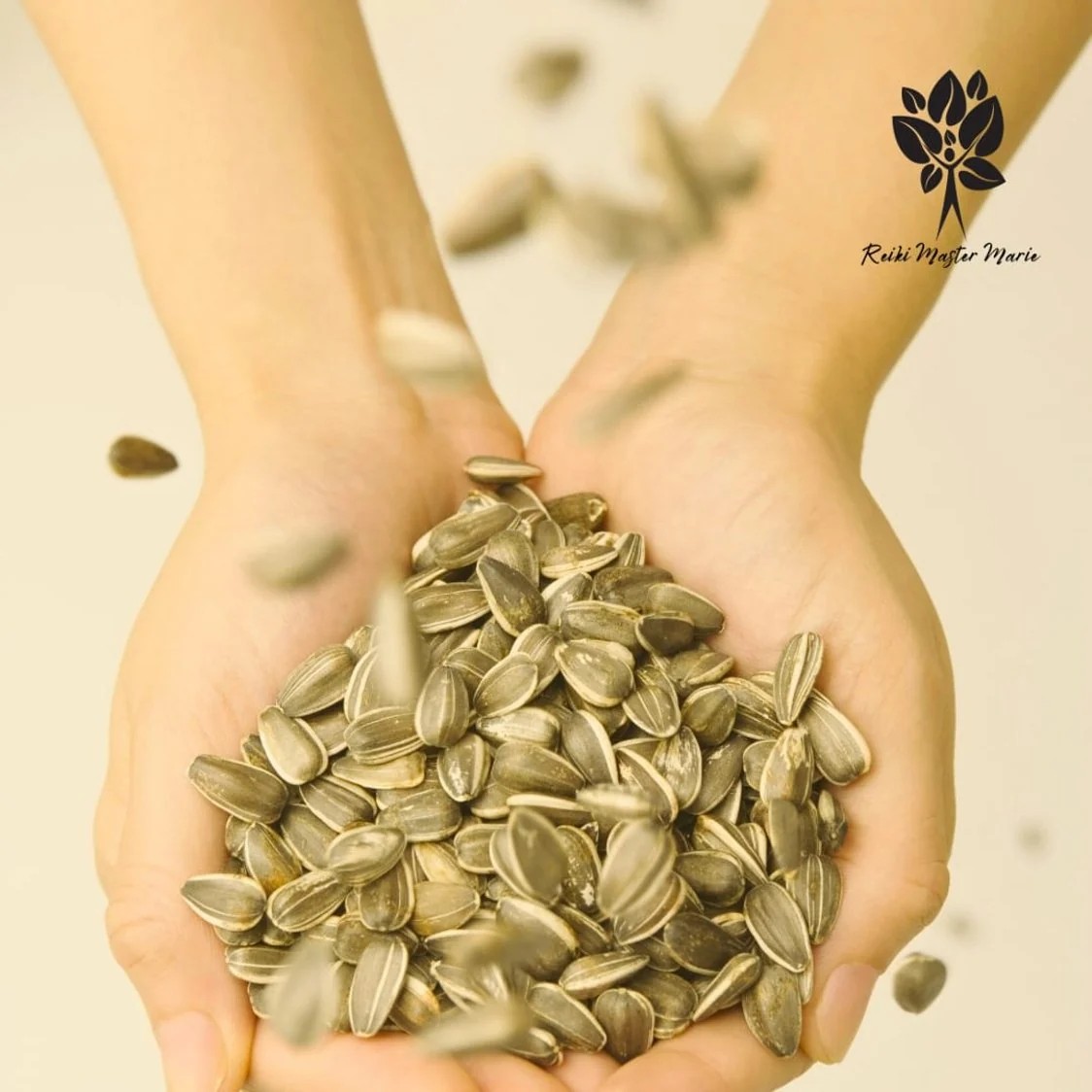
I have always found something extraordinary in a seed.
Held between our fingertips, it appears so small.
A simple form.
A protective covering.
A life waiting for the conditions that will allow it to grow.
From a single seed, a plant may emerge, develop roots, unfold its leaves, and eventually offer nourishment, flowers, or fruit.
Through my years working with food, I have developed a deep appreciation for the relationship between what the earth produces and the ways we nourish ourselves.
Seeds have always held a special place in that relationship.
They connect us with the origins of our food, the knowledge of earlier generations, and the remarkable processes through which life renews itself.
They also offer a beautiful image for contemplating our own inner journeys.
A Small Beginning with Extraordinary Potential
Every seed carries the biological structures and genetic information needed to begin the development of a new plant.
Under suitable conditions, it can germinate.
Roots begin to develop.
A shoot emerges.
Leaves unfold toward the light.
This process depends upon the nature of the seed and its environment, including moisture, temperature, oxygen, and, for certain species, light.
I find beauty in the precision of these natural processes.
A seed may remain dormant until conditions support its growth.
Others germinate quickly when they encounter a favorable environment.
Each follows the rhythm of its own species.
In observing this, I am reminded of the importance of recognizing our own circumstances.
We also need nourishment, rest, support, and opportunities to develop.
Our lives unfold through changing seasons, each with its own possibilities and needs.
Seeds Across Cultures and Generations
Seeds have accompanied human communities for thousands of years.
They have been gathered, cultivated, stored, exchanged, and passed from one generation to another.
They have helped sustain families and communities through changing seasons.
In many cultures, seeds also carry spiritual and symbolic meanings.
Ayurveda and Traditional Indian Practices
Within Ayurveda, seeds such as sesame, fennel, mustard, and basil have been used in traditional food preparations and wellness practices.
Sesame oil holds an important place in several Indian traditions, including massage and ritual practices.
These uses reflect a long history of cultural and medicinal knowledge.
Their traditional significance can be appreciated while recognizing that individual health claims require scientific evaluation.
Traditional Chinese Medicine
Traditional Chinese Medicine includes various seeds in its classical herbal preparations.
Their traditional uses are described through concepts such as Qi, Jing, and patterns of balance within the body.
These concepts belong to a distinct medical and philosophical framework.
Some seeds are also familiar foods, enjoyed for their flavor and nutritional qualities.
The distinction between a culinary ingredient and a concentrated medicinal preparation is important, particularly when herbs or seeds are used in therapeutic quantities.
Ancient Mediterranean Cultures
Flax, sesame, and other seeds were cultivated and consumed in parts of the ancient Mediterranean world.
They contributed to food traditions and, in certain contexts, to preparations used for health and personal care.
Seeds also appear in cultural and religious symbolism associated with fertility, abundance, and the continuity of life.
Their significance reminds us that nourishment has long been connected with community, ceremony, and the changing seasons.
Indigenous Relationships with Seeds
Across the world, Indigenous communities have developed diverse and sophisticated relationships with the seeds and plants of their regions.
These include agricultural knowledge, seed preservation, ecological stewardship, food traditions, and ceremonial practices.
Each community has its own history and understanding.
I believe these traditions deserve to be approached with respect for their specificity and for the people who continue to preserve them.
What Seeds Offer Our Bodies
Seeds contain nutrients that support the growth of a new plant.
Many edible seeds also offer valuable nourishment to human beings.
Depending on the variety, they may provide dietary fiber, protein, unsaturated fats, vitamins, minerals, and other naturally occurring compounds.
Their nutritional qualities differ considerably.
Some are particularly rich in omega-3 fatty acids.
Others provide magnesium, zinc, vitamin E, or plant protein.
Their preparation can also influence how we digest and absorb their nutrients.
From a culinary perspective, I appreciate the simplicity of incorporating seeds into everyday meals.
A spoonful added to breakfast.
A sprinkle over roasted vegetables.
A handful blended into a sauce.
A homemade seed mixture enjoyed with fruit or yogurt.
These small additions can bring flavor, texture, and nutritional variety to our food.
Eleven Seeds Worth Discovering
1. Chia Seeds
Chia seeds provide dietary fiber and plant-based omega-3 fatty acids.
When soaked in liquid, they develop a gel-like texture that makes them useful in puddings, breakfast bowls, and other preparations.
They can contribute to a varied diet and may help support normal digestive function through their fiber content.
2. Black Seeds — Nigella sativa
Black cumin seeds, also known as Nigella sativa, have a long history of culinary and traditional medicinal use in several cultures.
Their distinctive flavor makes them a beautiful addition to breads, vegetable dishes, and spice blends.
Research continues to explore their compounds and potential health effects, although they should not be considered a substitute for medical treatment.
3. Flaxseeds
Flaxseeds provide fiber, plant-based omega-3 fatty acids, and lignans.
Ground flaxseeds are generally easier for the body to digest than whole flaxseeds.
I enjoy their versatility in oatmeal, smoothies, and baked preparations.
4. Fennel Seeds
Fennel seeds have a gently sweet, aromatic flavor.
They are used in culinary traditions around the world and have a history of traditional use after meals.
They can be enjoyed as a seasoning in soups, vegetables, breads, and spice mixtures.
5. Pumpkin Seeds
Pumpkin seeds offer protein, unsaturated fats, magnesium, and zinc.
Their pleasant texture makes them suitable for salads, grain dishes, and homemade snacks.
Light roasting can bring out their rich, nutty flavor.
6. Sunflower Seeds
Sunflower seeds provide vitamin E, healthy fats, and other nutrients.
They are wonderfully versatile in the kitchen.
I particularly appreciate them in homemade spreads, seed crackers, and vegetable dishes.
7. Sesame Seeds
Sesame seeds have been cultivated for thousands of years.
They offer unsaturated fats, minerals, and plant compounds.
Tahini, made from ground sesame seeds, is one of the many delicious ways to enjoy them.
Sesame is also a recognized food allergen, making individual dietary needs especially important.
8. Poppy Seeds
Poppy seeds are used in many European and Middle Eastern culinary traditions.
Their delicate flavor and texture are familiar in breads, pastries, and other baked goods.
Food-grade poppy seeds should be obtained from reliable sources, as contamination with opium alkaloids can occur during harvesting and processing.
9. Hemp Seeds
Hulled hemp seeds, often called hemp hearts, provide plant protein and unsaturated fats.
Their soft texture and mild flavor make them easy to incorporate into meals.
They can be sprinkled over vegetables, added to smoothies, or blended into creamy dressings.
10. Basil Seeds — Sabja
Basil seeds are enjoyed in several Asian culinary traditions.
Like chia, they absorb liquid and develop a gel-like coating.
They are commonly used in beverages and desserts.
They should be prepared according to food-safe directions, with attention to adequate soaking when required.
11. Watermelon Seeds
Watermelon seeds are enjoyed as a roasted snack in various parts of the world.
When properly prepared, they can provide protein, fats, and minerals.
Their culinary use is a reminder that ingredients often overlooked in one culture may be appreciated in another.
A Simple Seed Blend for Everyday Nourishment
One of my favorite ways to appreciate seeds is to prepare a small mixture that can be added to meals.
The preparation is simple, and the ingredients can be adjusted according to personal preferences and dietary needs.
Ingredients
- 2 tablespoons pumpkin seeds
- 2 tablespoons sunflower seeds
- 2 tablespoons hulled hemp seeds
- 1 tablespoon sesame seeds
- 1 teaspoon culinary black cumin seeds (Nigella sativa)
Preparation
Combine the seeds in a clean, dry jar.
Stir gently to distribute the different varieties.
Store according to the freshness and storage instructions of the ingredients, preferably in a cool place in an airtight container.
Enjoy a small portion sprinkled over a salad, a bowl of vegetables, oatmeal, or another favorite dish.
For a sweeter preparation, you may combine a portion with yogurt and fruit, adding a little honey if desired.
The mixture is intended as food, rather than a medicinal treatment or prescribed daily supplement.
People with seed allergies, swallowing difficulties, digestive conditions, or specific medical dietary requirements may need to avoid or adapt certain ingredients.
Bringing Presence to Nourishment
Preparing food can be a beautiful opportunity to become more attentive to our daily lives.
I think of the hands that cultivated the ingredients.
The soil and water that supported their growth.
The people who harvested, transported, and prepared them.
The many relationships that allow food to reach our tables.
When I cook, I enjoy giving attention to these connections.
The colors.
The textures.
The aromas.
The simple pleasure of creating something nourishing.
A meal can become a moment of gratitude.
It may also be an occasion to share care with someone we love.
For me, this is one of the meaningful dimensions of culinary life.
The Seed as a Spiritual Symbol
Beyond its nutritional qualities, the seed carries a symbolism that has touched human imagination for generations.
It speaks of beginnings.
Of continuity.
Of the relationship between what is visible and what is still developing.
A seed grows through its encounter with the conditions around it.
It needs a suitable environment.
It responds to the changing seasons.
Its development follows the possibilities of its own nature.
I find this image especially meaningful when reflecting on healing and inner transformation.
We may carry aspirations that have remained quiet for many years.
A creative calling.
A desire for reconciliation.
A longing for a different way of living.
An understanding that has begun to take shape through experience.
These movements may require time and attention.
Some become clearer through reflection.
Others emerge through relationships, learning, or changes in our circumstances.
The seed reminds me that beginnings can be small.
And that what is growing within us deserves to be approached with patience and care.
Honoring the Life Entrusted to Us
When I hold a seed in my hand, I am reminded of the extraordinary continuity of life.
Its small form carries the possibility of a future plant.
Its growth will depend upon the conditions it encounters.
And if it flourishes, it may eventually offer nourishment and new seeds in return.
This simple cycle invites gratitude.
For the earth.
For those who cultivate our food.
For the knowledge passed between generations.
And for the many ways we participate in the care of life.
I hope we can bring this same tenderness to ourselves.
To our bodies, which accompany us through every passage.
To our emotions, which deserve understanding.
To our dreams, which may continue to change as we grow.
And to the relationships through which we offer and receive nourishment of another kind.
A seed may be small enough to rest in the palm of a hand.
Within it lives the possibility of a beginning.
Peace be with you, always.
Marie-Dominique Rail