
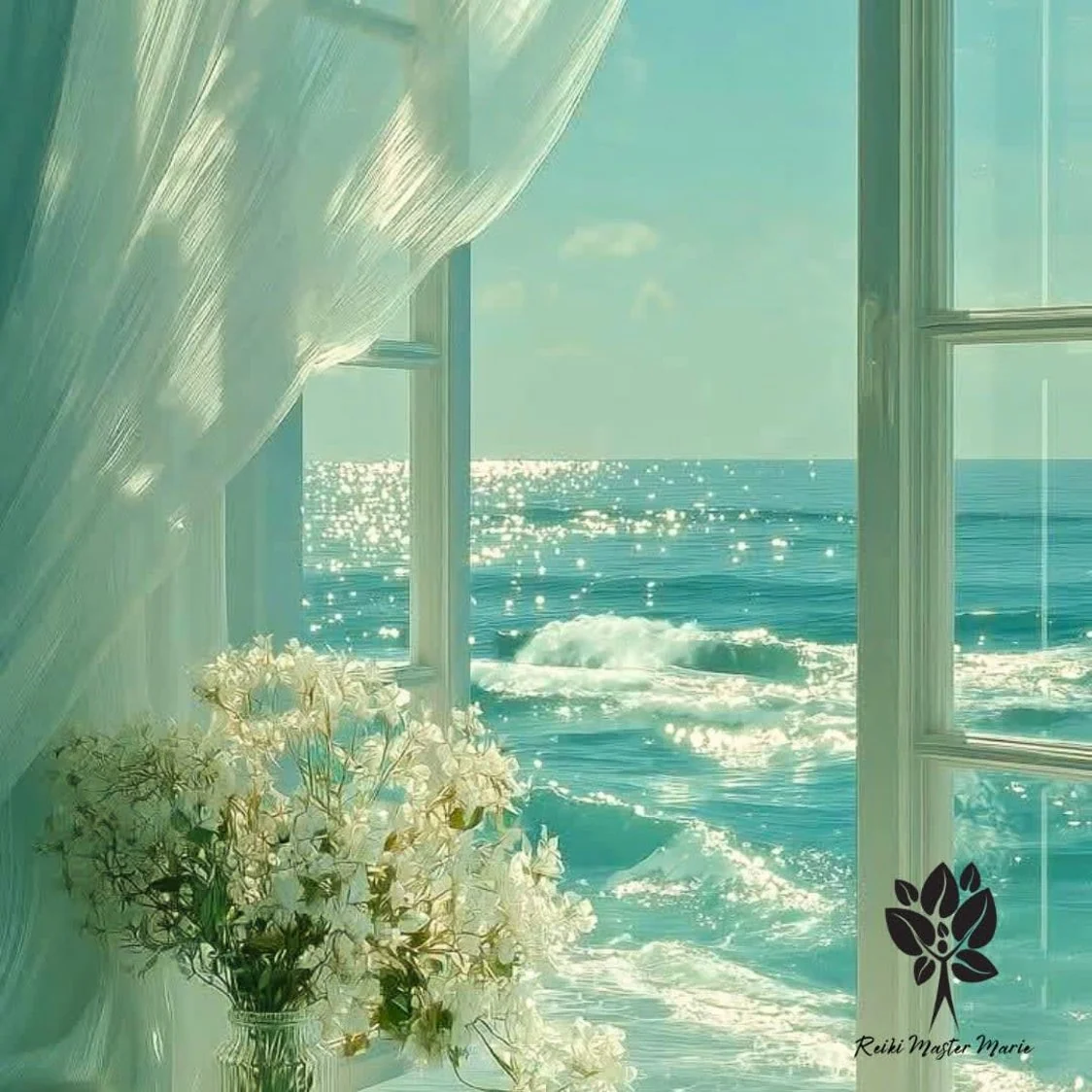
The Art of Seeing, Listening, and Becoming Present to the Living World
By Marie-Dominique Rail
Light enters a room through a window.
It rests upon the walls, reveals the texture of a wooden table, and illuminates the smallest particles moving through the air.
The room remains familiar.
We have seen it countless times.
And still, when we stop for a moment and truly look, something changes in our experience.
We notice what has been there all along.
The warmth of the light.
The movement of a shadow.
The quiet presence of the objects surrounding us.
I find this simple experience deeply meaningful.
It reminds me that our relationship with the world is continually shaped by the attention we bring to it.
We see through our eyes.
We interpret through our minds.
We respond through our bodies, emotions, memories, and personal understanding.
And within this living relationship, there is always more to discover.
The World We See and the World We Experience
Our eyes receive light reflected from the world around us.
The brain processes this information, allowing us to recognize shapes, colors, movement, and distance.
Our perception is also influenced by attention, memory, expectation, and experience.
Two people may stand before the same landscape and notice entirely different things.
One sees the changing colors of the sky.
Another notices the movement of the clouds.
Someone else hears the birds or remembers a place from childhood.
Each encounters the same environment through a different personal experience.
This diversity has always fascinated me.
It invites us to recognize how much our inner lives contribute to the meaning we find in the world.
Looking Beyond Appearances
In spiritual reflection, we often speak about looking beyond appearances.
For me, this expression invites a deeper quality of attention.
An old tree may first appear as a familiar part of the landscape.
As we approach, we discover the texture of its bark.
The movement of its branches.
The roots that hold it within the earth.
The small forms of life sheltered among its leaves.
We begin to appreciate its complexity.
Its relationship with the soil, the water, the light, and the changing seasons.
What appeared ordinary reveals an extraordinary living presence.
I believe contemplation begins through this willingness to observe.
To remain curious.
To allow the world to reveal its richness without requiring an immediate explanation.
The Spiritual Language of Light
Light has accompanied humanity’s spiritual imagination across centuries.
It appears in sacred writings, prayers, poetry, and contemplative traditions.
It may represent wisdom.
Understanding.
Hope.
Divine presence.
The awakening of consciousness.
I have always been drawn to the symbolism of light.
The way it enters a darkened room.
The way it changes the appearance of a landscape.
The way a single ray of sunlight can illuminate something we had overlooked.
Within my spiritual understanding, light becomes an invitation to greater awareness.
A reminder to approach life with discernment and an open heart.
Its meaning belongs to the realm of spiritual reflection.
And each person remains free to discover what this symbolism awakens within them.
The Tree: A Living Image of Grounding
Consider a tree standing in a garden.
Its roots extend into the earth.
Its trunk offers support.
Its branches reach toward the sky.
Throughout the seasons, it responds to the conditions surrounding it.
Rain nourishes the soil.
Wind moves through its leaves.
Sunlight supports its growth.
The tree exists through an intricate relationship with its environment.
I find this image particularly meaningful when reflecting upon grounding.
Our bodies also depend upon the living world.
We need air, water, nourishment, rest, and conditions that support our health.
Our relationships and surroundings influence our well-being.
We are participants in a world of living connections.
The tree reminds me of the importance of recognizing these foundations.
Water and the Movement of Life
Water offers another image for contemplation.
A stream moves across stones.
Its surface changes as the current encounters different shapes and depths.
The movement continues.
We may sit beside the water and listen.
Notice the reflections.
Observe the way sunlight moves across its surface.
For me, water evokes the changing nature of our experiences.
Our emotions move.
Our circumstances evolve.
Our understanding deepens.
There are experiences that require patience.
Others that invite us to reconsider our direction.
The image of flowing water offers room to contemplate these movements with gentleness.
Seeing with the Heart
We often use the expression seeing with the heart when speaking about compassion.
It suggests a way of recognizing the human experience beyond what is immediately visible.
Someone may appear composed while carrying profound grief.
A familiar smile may accompany exhaustion.
A quiet person may hold a rich inner life that others have never had the opportunity to know.
Our first impressions offer only part of another person’s story.
Attentive listening can help us understand more.
A conversation.
A shared silence.
The willingness to hear an experience different from our own.
These gestures invite us into a more compassionate relationship with others.
For me, this is one of the meaningful dimensions of spiritual perception.
The ability to recognize the humanity before us.
Meditation as an Experience of Presence
Meditation takes many forms.
Some practices involve attention to breathing.
Others use prayer, imagery, movement, or awareness of the senses.
Visual meditation invites us to observe an image or a scene with sustained attention.
Grounding practices help orient us toward our present surroundings and physical experience.
These approaches can be brought together in a gentle contemplative exercise.
The intention is simple.
To notice.
To become aware of our surroundings.
To recognize the support available to us.
And to allow ourselves a few moments of quiet attention.
A Visual and Grounded Meditation
You may explore this practice indoors or outside, wherever you feel reasonably comfortable.
Choose a place that allows you to remain attentive to your surroundings.
You may sit, stand, or rest according to your needs.
Beginning with What Is Here
Look around you.
Notice the colors within your field of vision.
The shapes of familiar objects.
The way light enters the space.
Allow your attention to settle upon something that feels pleasant or neutral.
A plant.
A window.
A stone.
A tree.
Or a small object resting nearby.
There is no particular experience to achieve.
Discovering the Details
Take a little time to observe.
Notice the texture.
The lines.
The movement of light and shadow.
If you are looking at a tree, observe its branches and leaves.
If you are looking at water, notice the reflections upon its surface.
If you are indoors, you may become aware of the materials and colors surrounding you.
Allow yourself to discover what draws your attention.
Recognizing Your Physical Support
Become aware of the surface beneath your feet or the chair supporting your body.
Notice the position of your hands.
The contact of your clothing.
The temperature of the air.
You may adjust your position whenever you wish.
The body remains part of the experience.
Listening to the World
Allow your attention to include the sounds around you.
A breeze.
A bird.
A distant conversation.
The familiar sounds of a room.
You may notice how these sounds come and go.
How some are close.
Others farther away.
The world continues moving around you.
And you are present within it.
A Moment of Contemplation
You may quietly ask yourself:
What am I noticing today that I had overlooked before?
What brings me a sense of connection with the world around me?
What does this moment invite me to appreciate?
You may welcome a thought, a feeling, or a memory.
You may also remain in silence.
Returning to Your Day
When you feel ready, notice the space around you once more.
Recognize the objects and sounds that are familiar.
Move comfortably.
Allow yourself to continue your day.
You may carry with you a detail that touched you.
A color.
A sound.
A movement.
A simple moment of beauty.
The Relationship Between Contemplation and Discernment
Spiritual reflection can open meaningful questions about life and consciousness.
It can invite us to explore the symbolism of nature, the experience of beauty, and our sense of connection with the world.
I believe discernment has an important place within this exploration.
Our experiences may carry spiritual meaning without requiring us to interpret every sensation as a message or every event as evidence of an invisible cause.
We can appreciate the mystery of existence while remaining attentive to what we know through observation and experience.
This relationship between wonder and discernment brings a particular richness to contemplation.
It allows us to remain curious.
To learn.
To question.
And to recognize that our understanding will continue to evolve.
Living with Greater Attention
I often think about the ordinary experiences that become precious when we truly notice them.
The first light of morning.
The sound of rain against a window.
The fragrance of a garden after a warm day.
A familiar melody.
The warmth of a cup held between our hands.
These moments belong to everyday life.
Their beauty may become more apparent when we give them our attention.
And this attention can influence the way we move through our days.
We may become more aware of what nourishes us.
More attentive to the people around us.
More appreciative of the living world.
More willing to recognize the value of a quiet moment.
The Visible World and the Mystery It Holds
The world offers us countless opportunities to observe, discover, and wonder.
Science continues to deepen our understanding of matter, light, life, and the remarkable processes through which nature unfolds.
Spiritual traditions invite their own reflections upon meaning, consciousness, and our relationship with existence.
Art and music give expression to experiences that can be difficult to describe through ordinary language.
I find beauty in the possibility of allowing these different ways of understanding to enrich our lives.
Each offers a particular perspective.
Each may awaken new questions.
And each reminds us of how much remains to be explored.
The world we encounter is filled with detail.
Its landscapes change with the seasons.
Its living beings grow and adapt.
Its light continually transforms the scenes before our eyes.
As I contemplate these movements, I am reminded of the importance of remaining present to the life unfolding around us.
The tree.
The stream.
The evening sky.
The familiar room.
The person sitting beside us.
Each invites a different quality of attention.
And through this attention, we may discover a deeper appreciation for the world we share.
Peace be with you, always.
Marie-Dominique Rail